Restaurant Food Safety: The Mistakes We Don’t Notice — Until It’s Too Late
Discover the unseen food safety mistakes that happen daily in busy restaurant kitchens — and how to prevent them before they cost your business.
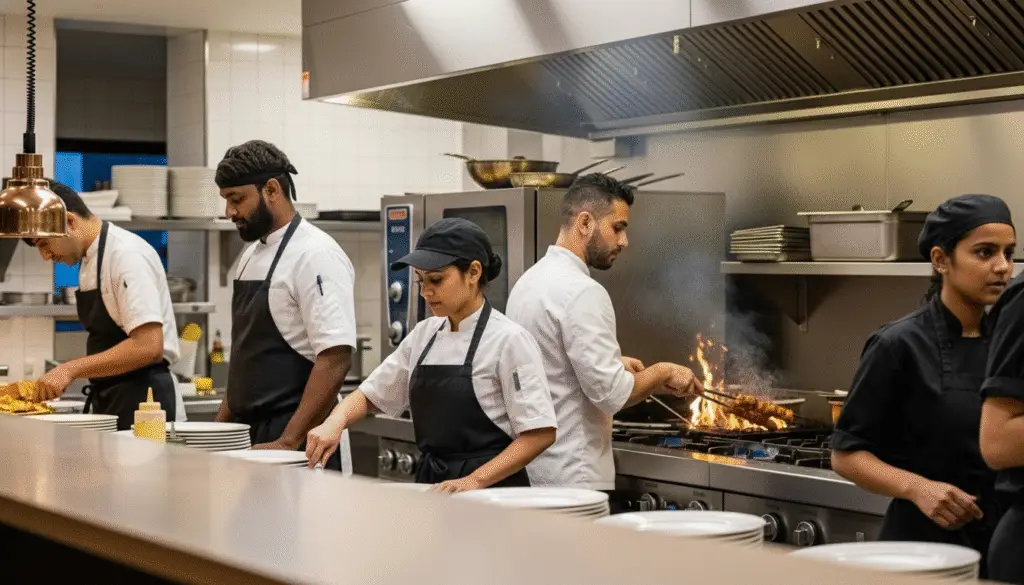
1. The Calm Before the Lunch Rush
It’s ten minutes before the lunch crowd hits.
Steam rises from pots, tickets start to print, and someone calls for more clean cutting boards.
On the surface, everything looks perfect — spotless counters, gloves on hands, sanitizers within reach.
But look closer.
A prep cook slices chicken on a board that was used for vegetables just minutes ago. Another opens the walk-in fridge and leaves the door ajar.
No one notices. Everyone’s too focused on the rush.
And that’s how food safety mistakes usually happen — not from lack of knowledge, but from complacency.
2. Hidden Risks in a Perfectly Clean Kitchen
Even in the cleanest kitchens, unseen risks are everywhere:
- Cross-contamination when raw and cooked foods share space.
- Temperature control errors when cold storage isn’t checked regularly.
- Improper hand hygiene after handling phones or money.
These are the silent details that turn into serious problems later.
According to the World Health Organization (WHO), unsafe food handling contributes to over 600 million cases of foodborne illness globally each year — most linked to basic hygiene lapses.
3. The “I Know This” Trap — Why Experience Can Be Dangerous
Ironically, some of the biggest food safety risks come from the most experienced staff.
They’ve “done this for years” and “never had a problem.”
But habits form, shortcuts creep in, and soon the hand-washing station becomes optional instead of automatic.
In a Gulf kitchen — where temperatures are high and ingredients perish faster — even a 10-minute slip in temperature control can mean spoiled food or, worse, customer illness.
Knowledge is not the problem.
Consistency is.
4. The Wake-Up Moment
It usually takes a scare to remind us.
A guest complaint about food temperature.
A sudden inspection visit.
Or a team member falling ill after a shift meal.
When that happens, every manager realizes: the systems looked fine, but the discipline wasn’t.
True food safety culture isn’t built on checklists — it’s built on habits.
5. Simple Fixes That Prevent Major Food Safety Failures
Food safety doesn’t need expensive solutions; it needs daily discipline.
✅ Check temperatures hourly — not “whenever we remember.”
✅ Label and date every container, even for short-term storage.
✅ Train and retrain — especially new or part-time staff.
✅ Create visible hygiene reminders near sinks and prep zones.
✅ Lead by example — managers washing hands in view of staff do more for compliance than any policy.
6. Key Takeaways for Restaurant Managers
- Small daily slips cause most food safety incidents.
- Even trained staff need visible leadership and constant reminders.
- The best restaurants make hygiene part of their identity, not just compliance.
Building that culture starts with one question every shift:
“Would I serve this to my family?”
If the answer is no — don’t serve it at all.
Learn. Lead. Serve Better.
Be the kind of hospitality leader who raises standards, empowers teams, and delivers experiences that guests never forget.